We’ve had some people express their intimidation of installing the standalone harness and have questions about how they are to be wired. Each connection is labelled and there are tailored instructions included with each updated Duramax standalone harness. In this video, you will get some great information, tips for installation and a visual demonstration of the process. This example is an LMM Duramax, without the transmission portion, but the installation to the upper engine harness and power source to make the Duramax run is basically the same for all LB7, LLY, LBZ, LMM and LML applications.
We are now offering Duramax LML standalone solutions. Please look under the RPO Codes top level, then LML to see the harness and tuning as well as the LML Y-bridge and more upgrades or the wiring options under shop. Also, we highly recommend all tuning for your harness is done through us and it is very important to get your TCM tuned, as well as your ECM.
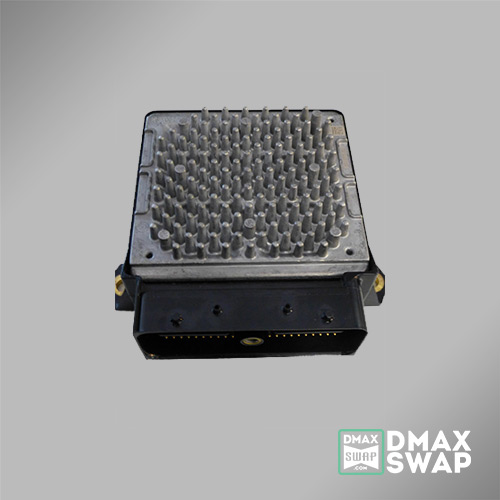
Our Dmax Swap standalone tuning for Duramax power trains are performed using EFILive software. We have experience tuning standalone duramax power trains in literally dozens of configurations, engine only configurations from boats to race vehicles as well many applications with factory Allison, 6l80e and 4L80e controllers.
It is important to tune not only the ECM but also the TCM for proper torque management and shift control. GM diesel operating systems are very dependent on torque input and shaft speed to determine shift feel and quality. Therefore everything from vehicle weight, to tire size and gear ratio can affect not only the transmission operation and durability, but also the power delivery from the engine.
We offer ECM and TCM custom programming for your crazy application as follows:
ECM Tuning
Single custom Engine calibration- We connect your ECM on a bench harness and read out the calibration in the provided module and confirm
Communication and retrieve the file installed currently. We choose the most appropriate operating system for your application (this is very critical for operation with any GM factory TCM). The file is then calibrated for your modifications and desired power level. Everything from injection pressure to turbo cane position tables are altered to generate the most efficient operation at the desired power level.
DSP-5 Tuning
Duramax Selectable Programming (DSP-5) provides the ability to load multiple Calibrations in the ECM which can be instantly accessed through a 5 position switch in the vehicle. This can be used to provide multiple power levels in the ECM “on the fly”.
TCM Tuning
Transmission control module calibration, as previously stated its critical to ensure the proper OS match between ECM and TCM, so the module is connected to the bench harness, read out, and the proper OS is selected for calibration. The custom calibration includes adjustment for shift timing, shift speeds and WOT shift speeds/RPMs. Torque management is handled by tables stored into the TCM, which are edited to compliment the ECM calibration.
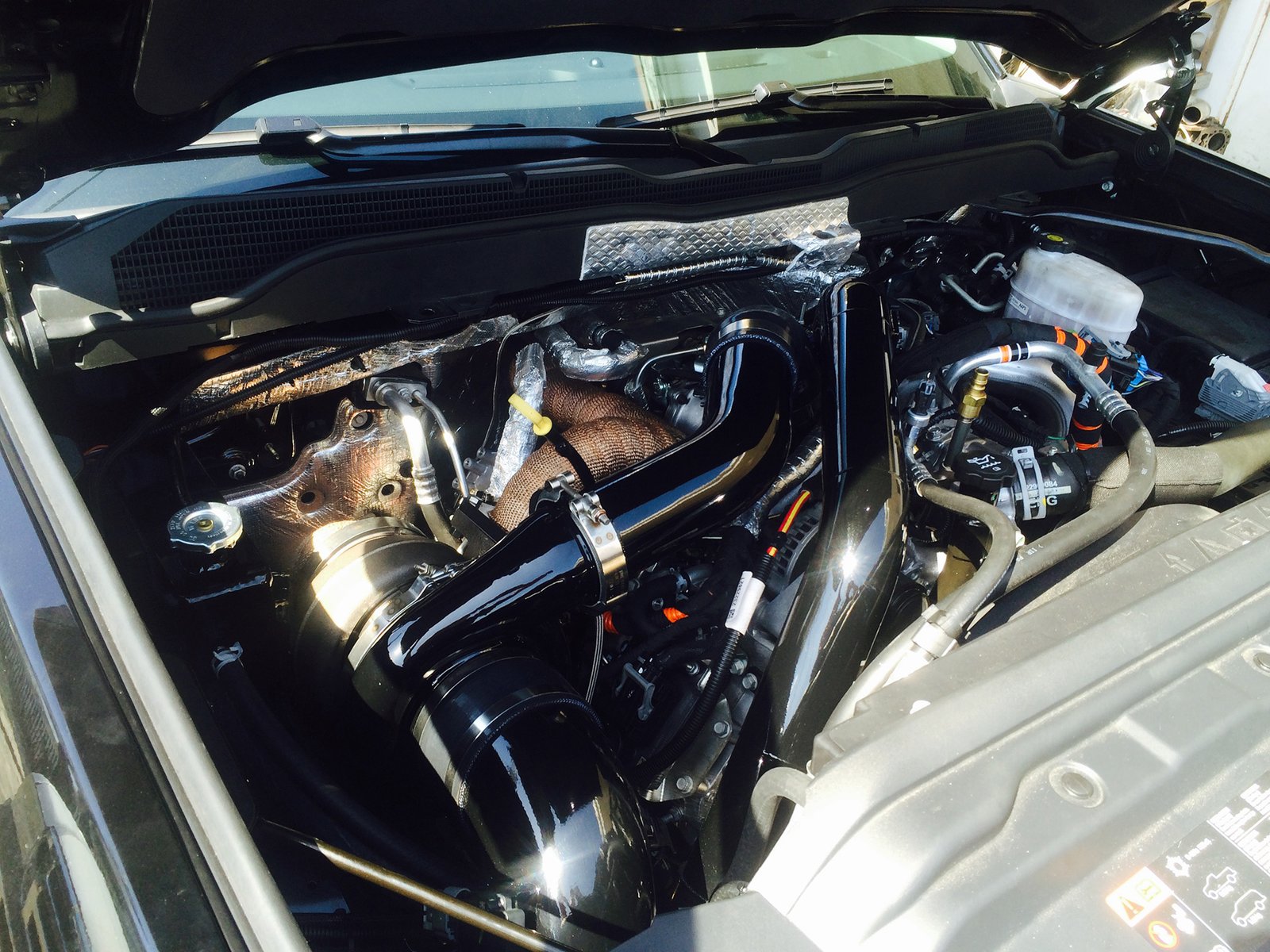
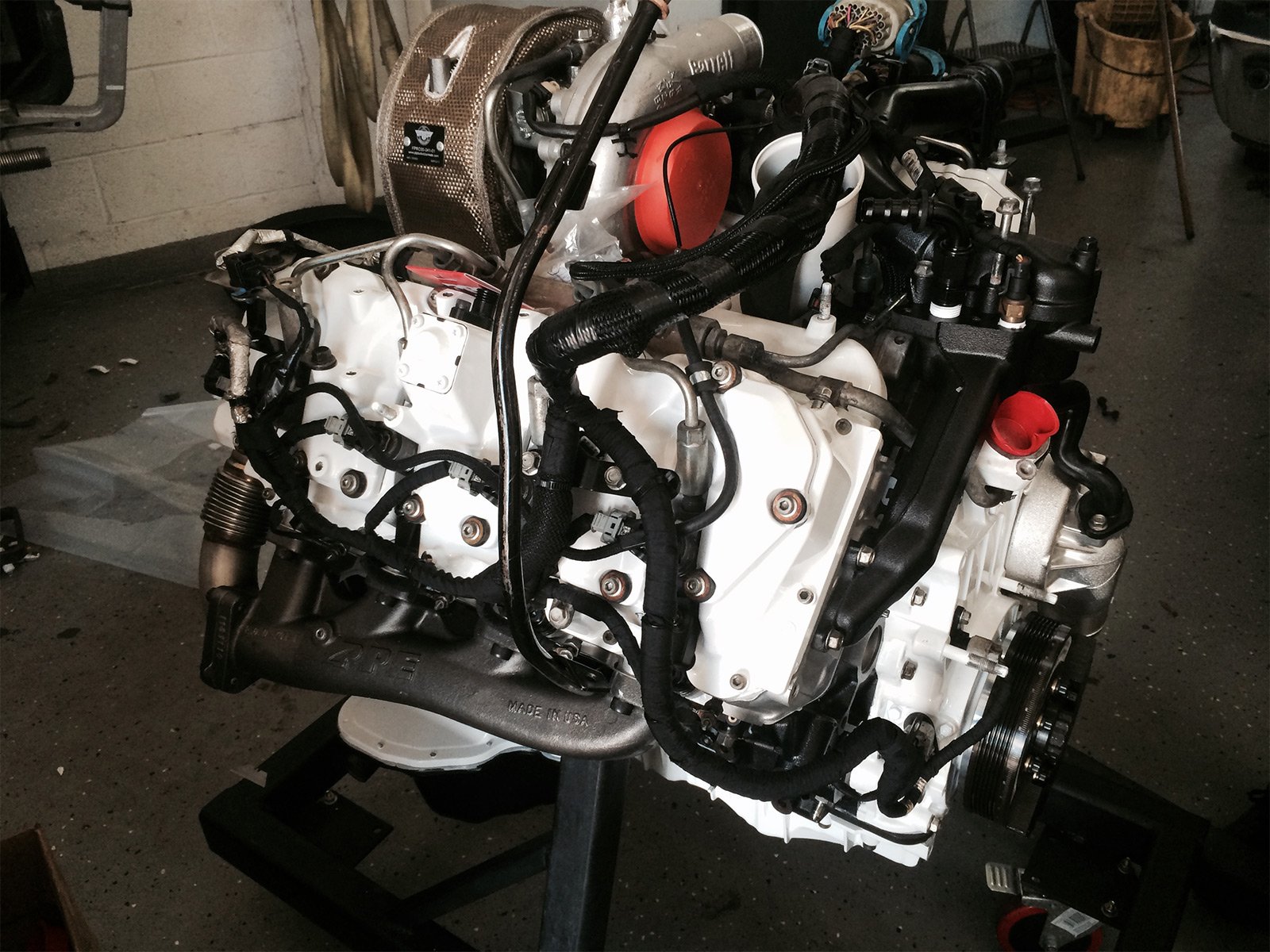
The L5p was first introduced in 2017 and continued until 2019 with the 6 speed Allison option. The best way to identify this engine is the large turbo actuator on top of the VGT turbo as well as the large intake plenum that forms a “Y” connecting to each cylinder head individually. They also have a large SCR catalyst attached directly to the back of the turbine housing.
Direct injection, high-pressure common rail, Denso HP4 pump, Denso GS4 Gen-III solenoid fuel injectors
Horsepower
445 hp @ 2,800 rpm
Torque
910 lb-ft @ 1,600 rpm
2011 – 2014 Duramax LML
Quick Identifier:
LMLs were used from 2011-2016. Ways to identify this engine: – Orange wire loom on electrical harness due to high voltage – Dual EGR coolers
The LML Duramax is released for 2011 model General Motors & Chevrolet HD trucks. The latest version of the 6.6L Duramax, the LML uses advanced emissions equipment, including the use of diesel exhaust fluid injection, to reduce nitrogen oxide emission levels by 63 percent over LMM powered trucks. This allows the LML to exceed currently mandated federal emissions requirements & meet future future requirements as well. Not only is the LML the cleaniest Duramax in history; it is also the most powerul, being released with 397 horsepower & 765 lb-ft of torque.
• Direct injection • Bosch high pressure common rail • 30,000 psi max injection pressure
Horsepower
397 hp @ 3,000 RPM
Torque
765 lb-ft @ 1,600 RPM
2007.5 – 2010 Duramax LMM
Quick Identifier:
LMMs were used from 2007.5-2010. Ways to identify this engine: – Exposed injectors and injector harnesses – Variable veined turbo charger – No FICM (fuel injection control module) on the passenger side valve cover – EGR cooler is rectangular
Nearly identical to the LBZ, the LMM debuted midway into the 2007 model year (2007.5). The slight variations between the LBZ and LMM gave the LMM a small boost in power output. The LMM features new emissions equipment that meet strict new diesel emission laws, and is currently in production today. Using a diesel particulate filter (DPF) and active regeneration technology, the LMM cut particulate matter emissions by 90 percent over the previous generation.
Years Produced
2007.5 – 2010
Displacement
403 cubic inches, 6.6 liters
Configuration
90 degree V8
Compression Ratio
16.8:1
Bore
4.06 inches
Stroke
3.90 inches
Aspiration
Intercooler & variable geometry turbocharger
Valvetrain
OHV, 4 valves per cylinder
Injection
26,000 psi Bosch high pressure common rail w/ CP3 injection pump
Horsepower
365 hp @ 3,100 RPM
Torque
660 lb-ft @ 1,800 RPM
2006 – 2007 Duramax LBZ
Quick Identifier:
LBZs were used from 2006-2007. Ways to identify this engine: – Exposed injectors and injector harnesses – Variable vane turbo charger – No FICM (fuel injection control module) on the passenger side valve cover – EGR cooler is cylindrical
The LBZ replaced the LLY late in the 2006 model year and production continued through 2007. A large bump in output was seen with the introduction of the LBZ. Mechanically, the LBZ is very similar to the 2006 LLY model. The most significant difference between the LLY and LBZ is the computer controls. The LBZ features a much “wilder” tune, giving it a large increase in power horsepower and torque output.
Years Produced
2006 – 2007
Displacement
403 cubic inches, 6.6 liters
Configuration
90 degree V8
Compression Ratio
16.8:1
Bore
4.06 inches
Stroke
3.90 inches
Aspiration
• Variable geometry turbocharger (VGT) • air to air intercooler • 20 psi maximum boost pressure
Valvetrain
OHV, 4 valves per cylinder
Injection
• Direct injection, high pressure Bosch common rail injection system, CP3 injection pump • Maximum 26,000 psi injection pressure • Seven hole injectors
Horsepower
360 hp @ 3,200 RPM
Torque
650 lb-ft @ 1,600 RPM
2004.5 – 2005 Duramax LLY
Quick Identifier:
LLYs were used from 2004.5-2005. Ways to identify this engine: – Exposed injectors and injector harnesses – Variable vane turbo charger – Has FICM (fuel injection control module) on the passenger side valve cover – EGR cooler is cylindrical
The Duramax LLY was introduced in 2004 to replace the popular LB7. Like the LB7, the LLY utilizes a high pressure common rail direct injection system. The LLY was General Motors’ first attemp at implementing emission controls on a diesel engine to meet stricter emissions requirements in the future. The LLY adopted a variable geometry turbocharger (VGT) and exhaust gas recirculation (EGR) system to help reduce emissions. Huge changes to the LLY debuted in 2005, but the engines were mechanically identical.
Years Produced
2004.5 – 2005
Displacement
403 cubic inches, 6.6 liters
Configuration
90 degree V8
Compression Ratio
17.5:1 (16.8:1 in 2006)
Bore
4.06 inches
Stroke
3.90 inches
Aspiration
• Garrett variable geometry turbocharger (VGT) • air to air intercooler
Valvetrain
OHV, 4 valves per cylinder
Injection
• Direct injection • Bosch high pressure common rail, CP3 injection pump • 23,000 psi max injection pressure
LB7s were used from 2001-2004. Ways to identify this engine: – Injectors and injector harnesses under the valve covers – The FICM (fuel injection control module) will be located on the front of the passenger side valve cover
The LB7 Duramax was first introduced in 2001 and produced until 2004. The 32 valve, V8 design utilizes a high pressure common rail direct injection system. Due to the lack of emission equipment, the LB7 is considered one of the most sought after Duramax’s built, obtaining the best fuel mileage and having the simplest design.
Years Produced
2001 – 2004
Displacement
402 cubic inches, 6.6 liters
Configuration
90 degree V8
Compression Ratio
17.5:1
Bore
4.06 inches
Stroke
3.90 inches
Aspiration
• Turbocharger • air to air intercooler • Maximum boost: 20 psi
Valvetrain
OHV, 4 valves per cylinder
Injection
• Direct injection • Bosch high pressure common rail, CP3 injection pump • 23,000 psi max injection pressure
Horsepower
• 235 hp @ 2,700 RPM (2001) • 300 hp @ 3,100 RPM (2004)
The L5p was first introduced in 2017 and continued until 2019 with the 6 speed Allison option. The best way to identify this engine is the large turbo actuator on top of the VGT turbo as well as the large intake plenum that forms a “Y” connecting to each cylinder head individually. They also have a large SCR catalyst attached directly to the back of the turbine housing.
Direct injection, high-pressure common rail, Denso HP4 pump, Denso GS4 Gen-III solenoid fuel injectors
Horsepower
445 hp @ 2,800 rpm
Torque
910 lb-ft @ 1,600 rpm
Quick Identifier:
LMLs were used from 2011-2016. Ways to identify this engine: – Orange wire loom on electrical harness due to high voltage – Dual EGR coolers
The LML Duramax is released for 2011 model General Motors & Chevrolet HD trucks. The latest version of the 6.6L Duramax, the LML uses advanced emissions equipment, including the use of diesel exhaust fluid injection, to reduce nitrogen oxide emission levels by 63 percent over LMM powered trucks. This allows the LML to exceed currently mandated federal emissions requirements & meet future future requirements as well. Not only is the LML the cleaniest Duramax in history; it is also the most powerul, being released with 397 horsepower & 765 lb-ft of torque.
• Direct injection • Bosch high pressure common rail • 30,000 psi max injection pressure
Horsepower
397 hp @ 3,000 RPM
Torque
765 lb-ft @ 1,600 RPM
Quick Identifier:
LMMs were used from 2007.5-2010. Ways to identify this engine: – Exposed injectors and injector harnesses – Variable veined turbo charger – No FICM (fuel injection control module) on the passenger side valve cover – EGR cooler is rectangular
Nearly identical to the LBZ, the LMM debuted midway into the 2007 model year (2007.5). The slight variations between the LBZ and LMM gave the LMM a small boost in power output. The LMM features new emissions equipment that meet strict new diesel emission laws, and is currently in production today. Using a diesel particulate filter (DPF) and active regeneration technology, the LMM cut particulate matter emissions by 90 percent over the previous generation.
Years Produced
2007.5 – 2010
Displacement
403 cubic inches, 6.6 liters
Configuration
90 degree V8
Compression Ratio
16.8:1
Bore
4.06 inches
Stroke
3.90 inches
Aspiration
Intercooler & variable geometry turbocharger
Valvetrain
OHV, 4 valves per cylinder
Injection
26,000 psi Bosch high pressure common rail w/ CP3 injection pump
Horsepower
365 hp @ 3,100 RPM
Torque
660 lb-ft @ 1,800 RPM
Quick Identifier:
LBZs were used from 2006-2007. Ways to identify this engine: – Exposed injectors and injector harnesses – Variable vane turbo charger – No FICM (fuel injection control module) on the passenger side valve cover – EGR cooler is cylindrical
The LBZ replaced the LLY late in the 2006 model year and production continued through 2007. A large bump in output was seen with the introduction of the LBZ. Mechanically, the LBZ is very similar to the 2006 LLY model. The most significant difference between the LLY and LBZ is the computer controls. The LBZ features a much “wilder” tune, giving it a large increase in power horsepower and torque output.
Years Produced
2006 – 2007
Displacement
403 cubic inches, 6.6 liters
Configuration
90 degree V8
Compression Ratio
16.8:1
Bore
4.06 inches
Stroke
3.90 inches
Aspiration
• Variable geometry turbocharger (VGT) • air to air intercooler • 20 psi maximum boost pressure
Valvetrain
OHV, 4 valves per cylinder
Injection
• Direct injection, high pressure Bosch common rail injection system, CP3 injection pump • Maximum 26,000 psi injection pressure • Seven hole injectors
Horsepower
360 hp @ 3,200 RPM
Torque
650 lb-ft @ 1,600 RPM
Quick Identifier:
LLYs were used from 2004.5-2005. Ways to identify this engine: – Exposed injectors and injector harnesses – Variable vane turbo charger – Has FICM (fuel injection control module) on the passenger side valve cover – EGR cooler is cylindrical
The Duramax LLY was introduced in 2004 to replace the popular LB7. Like the LB7, the LLY utilizes a high pressure common rail direct injection system. The LLY was General Motors’ first attemp at implementing emission controls on a diesel engine to meet stricter emissions requirements in the future. The LLY adopted a variable geometry turbocharger (VGT) and exhaust gas recirculation (EGR) system to help reduce emissions. Huge changes to the LLY debuted in 2005, but the engines were mechanically identical.
Years Produced
2004.5 – 2005
Displacement
403 cubic inches, 6.6 liters
Configuration
90 degree V8
Compression Ratio
17.5:1 (16.8:1 in 2006)
Bore
4.06 inches
Stroke
3.90 inches
Aspiration
• Garrett variable geometry turbocharger (VGT) • air to air intercooler
Valvetrain
OHV, 4 valves per cylinder
Injection
• Direct injection • Bosch high pressure common rail, CP3 injection pump • 23,000 psi max injection pressure
LB7s were used from 2001-2004. Ways to identify this engine: – Injectors and injector harnesses under the valve covers – The FICM (fuel injection control module) will be located on the front of the passenger side valve cover
The LB7 Duramax was first introduced in 2001 and produced until 2004. The 32 valve, V8 design utilizes a high pressure common rail direct injection system. Due to the lack of emission equipment, the LB7 is considered one of the most sought after Duramax’s built, obtaining the best fuel mileage and having the simplest design.
Years Produced
2001 – 2004
Displacement
402 cubic inches, 6.6 liters
Configuration
90 degree V8
Compression Ratio
17.5:1
Bore
4.06 inches
Stroke
3.90 inches
Aspiration
• Turbocharger • air to air intercooler • Maximum boost: 20 psi
Valvetrain
OHV, 4 valves per cylinder
Injection
• Direct injection • Bosch high pressure common rail, CP3 injection pump • 23,000 psi max injection pressure
Horsepower
• 235 hp @ 2,700 RPM (2001) • 300 hp @ 3,100 RPM (2004)